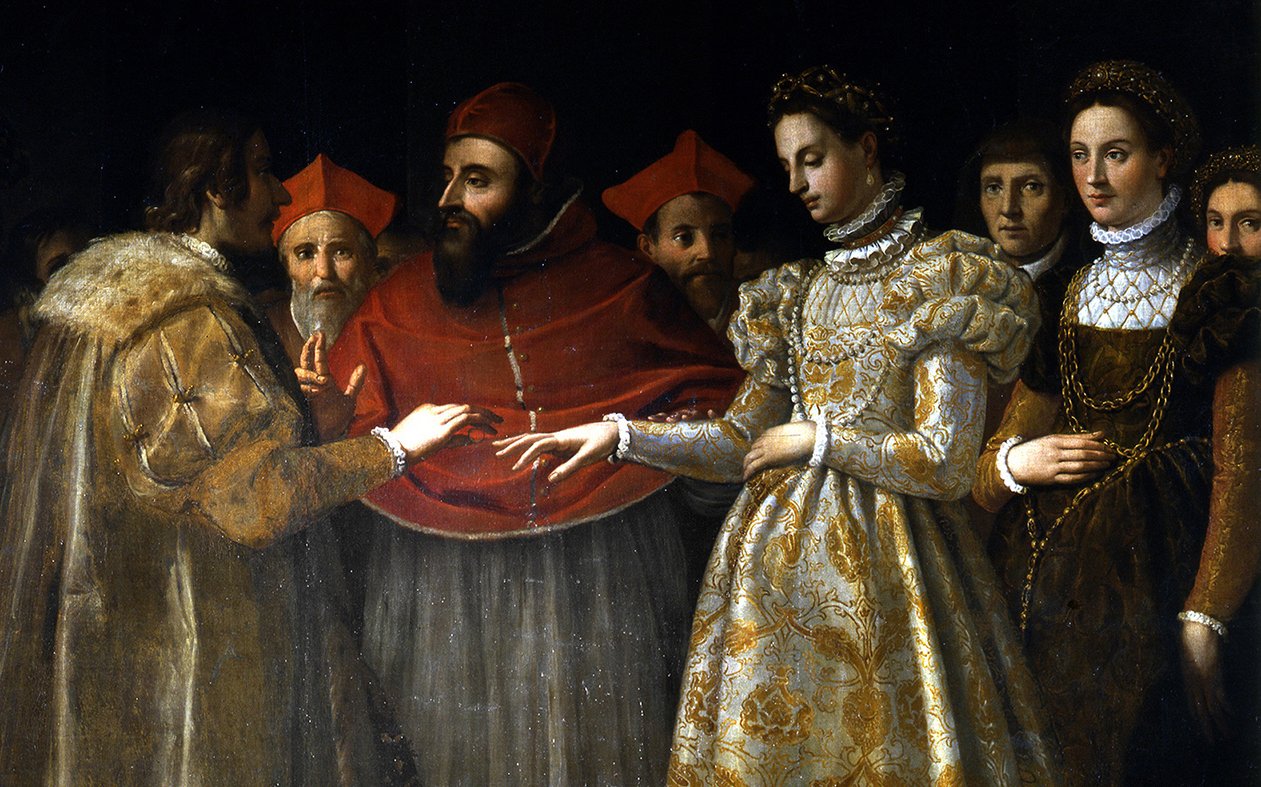
Few figures in Renaissance history reshaped a city’s politics, architecture, and administration as thoroughly as Cosimo I de’ Medici. He took power as a teenager after an assassination and died as the ruler of nearly all of Tuscany. His name appears on some of Florence’s most recognizable buildings, and his family line sits at the center of one of history’s most studied dynasties.
This article covers who Cosimo I was, how he rose to power, what he built, and why his legacy still draws researchers, genealogists, and travelers to Florence today.
Who Was Cosimo I de’ Medici?
Cosimo I de’ Medici was born on June 12, 1519, and died on April 21, 1574. He ruled Florence as its Duke from 1537 to 1574. In 1569, Pope Pius V granted him the title of Grand Duke of Tuscany, making him the first person to hold that position.
He came from a branch of the Medici family descended from Lorenzo the Elder, who was the brother of the much earlier Cosimo de’ Medici. That earlier branch had been politically less prominent before Cosimo I came to power.
One important clarification: Cosimo I was the second Duke of Florence, not the founder of Medici rule. He was also not the same person as Cosimo the Elder, who lived more than a century before him. That confusion is worth clearing up directly, and there is a full section below dedicated to it.
How a Teenager Came to Rule Florence
In January 1537, Alessandro de’ Medici — the first Duke of Florence — was assassinated by a distant cousin. Alessandro left no clear successor. Florentine leaders, looking for a Medici they could manage, turned to seventeen-year-old Cosimo.
They likely expected him to be easy to control. He was not.
Cosimo started within the existing framework of Florentine republican institutions. Over time, he steadily reduced their influence and concentrated power in his own hands. When opponents tried to remove him from power, he held on — in part because Holy Roman Emperor Charles V supported him. That imperial backing gave him important political cover during the early years of his rule.
His consolidation of control was gradual rather than sudden. He built authority piece by piece, through administration, military strength, and strategic alliances.
Cosimo I vs. Cosimo the Elder — Clearing Up the Confusion
This is one of the most common points of confusion for people researching the Medici family, so it helps to lay it out simply.
- Cosimo the Elder (1389–1464): The earlier Medici statesman who established the family’s dominant political position in Florence. He is often called the founding figure of Medici political power.
- Cosimo I (1519–1574): A sixteenth-century ruler from a separate branch of the same family. He became Duke of Florence and later the first Grand Duke of Tuscany.
- Cosimo II: A later grand duke who was active in the seventeenth century, also distinct from both of the above.
The two Cosmos share a first name and a surname, but they were from different centuries and different branches of the dynasty. Think of it like two cousins from separate branches of a large family who happen to share the same name — not the same person, and not even a direct father-to-son line.
Cosimo I was descended from Lorenzo the Elder, who was the brother of Cosimo the Elder. That makes Cosimo I part of a related but separate family line, not a direct descendant of the earlier ruler.
Military Expansion and the Creation of the Grand Duchy
Cosimo I did not simply govern Florence. He expanded it.
In 1554, he launched an attack on Siena, one of Tuscany’s major rival city-states. By 1557, Siena had been formally annexed. This brought nearly all of Tuscany under Medici control, which was a significant territorial achievement by any measure.
In 1569, Pope Pius V recognized this elevated status by granting Cosimo the title of Grand Duke of Tuscany. The title transformed what had been the Duchy of Florence into a broader, formally recognized Tuscan state under Medici rule.
His reign was not simply about culture and architecture. It combined efficient administration, territorial expansion, and the deliberate concentration of political power in one family. He improved how Florence was governed while also making sure that governance answered to him.
The Uffizi, Palazzo Vecchio, and the Architecture of Power
Some of Florence’s most visited landmarks today carry Cosimo I’s fingerprints — though not always in the way people expect.
The Uffizi Was Not Built as a Museum
Around 1560, Cosimo commissioned the architect Giorgio Vasari to design a large building near Palazzo Vecchio. The purpose was administrative: to bring Florence’s government departments, magistrates, and guilds under one roof.
The name Uffizi simply means “offices.” It was a government complex, not an art gallery. The building was constructed between roughly 1560 and 1580. Only later did the upper floor become a repository for Medici art collections, eventually growing into the museum visitors know today.
Cosimo did not design the building himself. Vasari was the principal architect. But Cosimo initiated the project and shaped its purpose.
Palazzo Vecchio and the Pitti Palace
Cosimo transformed Palazzo Vecchio from a civic building into a ducal residence and government center. His court later moved to the Pitti Palace on the opposite side of the Arno River.
To connect these two centers, Vasari designed the Vasari Corridor — an elevated passageway that allowed the ruling family to move between Palazzo Vecchio, the Uffizi, and the Pitti Palace without going through the streets. It was a practical solution, but also a visible statement of dynastic reach.
These three structures — Palazzo Vecchio, the Uffizi, and the Pitti Palace — illustrate how Cosimo used architecture to serve both daily administration and the larger image of Medici power.
Artistic Patronage and Cultural Projects
Cosimo I was a patron of the arts, though his motives were rarely purely aesthetic. Art and architecture helped project authority and dynastic legitimacy.
He supported artists including the painter Bronzino and the sculptor and architect Bartolommeo Ammannati. He also sponsored archaeological excavations connected with Etruscan sites and helped establish the Florentine Academy, an institution focused on the study of the Italian language.
His relationship with Giorgio Vasari extended beyond architecture. Vasari, also known as the author of Lives of the Artists, served Cosimo in multiple roles — as a designer, a painter, and an administrator of artistic projects. Their collaboration shaped a significant portion of Florence’s mid-sixteenth-century built environment.
His Legacy and Why People Still Search for Him
Cosimo I de’ Medici left behind a complicated legacy. He modernized Florence’s administration and expanded Tuscany’s territory. He commissioned buildings that still stand and commissioned art that still hangs in museums. He also concentrated power in ways that reduced the independence of older Florentine civic institutions.
Presenting him only as a generous Renaissance patron would miss the full picture. So would presenting him only as an authoritarian ruler. His reign was both things at once.
People search for him today for different reasons. Some are visiting Florence and want to understand the buildings they are walking through. Some are reading historical fiction or studying Renaissance Europe. Others are researching their own family trees and have encountered the Medici name in a genealogy database.
If you have found a claimed connection to Cosimo I in a family history database, it is worth examining the full documented line carefully. Online family trees sometimes contain errors or unsourced links. A confirmed connection requires a traceable, documented lineage rather than a shared surname alone. The name “de’ Medici” does not automatically prove a connection to the ruling dynasty. For anyone interested in researching business history, lineage, and legacy topics more broadly, resources like Start Business Advice can offer useful context on how historical decisions shaped lasting institutions.
A Quick Timeline
- 1519: Cosimo I is born in Florence.
- 1537: He becomes ruler of Florence at approximately seventeen years old.
- 1554–1557: War against Siena and formal annexation.
- 1560: The Uffizi project begins under Giorgio Vasari.
- 1569: Pope Pius V grants him the title of Grand Duke of Tuscany.
- 1574: Cosimo I dies in Florence.
Final Thoughts
Cosimo I de’ Medici is one of the more consequential figures of the Italian Renaissance, though he is often overshadowed by his more famous Medici relatives. He was not Cosimo the Elder, and he did not found the dynasty. What he did do was take a city in political chaos, hold it together as a teenager, expand it into a recognized grand duchy, and leave behind buildings that Florence still uses today.
That is a record worth understanding on its own terms.
Read Also: