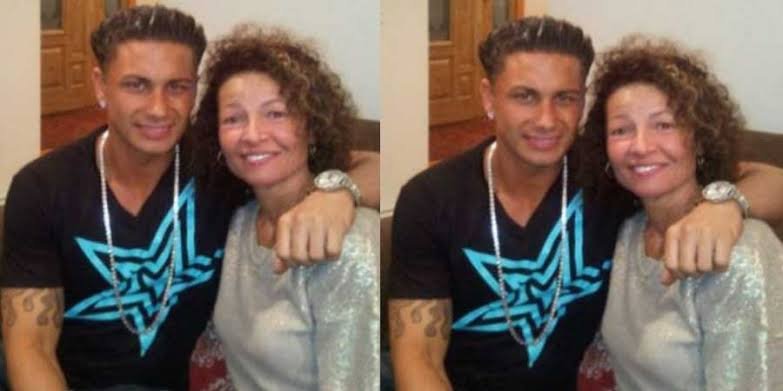
If you searched for “Donna Dicarlo Delvecchio” and ended up here, you are probably not reading a tabloid headline or a celebrity biography. You most likely spotted her name inside a family tree on a genealogy platform — and then wanted to know more about who she is and how she fits in.
That is a completely normal experience. Genealogy sites like Ancestry, Geni, and MyHeritage surface thousands of private individuals every day, simply because a relative added them to a shared tree. This article explains why Donna appears to be a private person rather than a public figure, what her surnames tell us about Italian-American heritage, and how you can responsibly research her place in a family history.
Why Donna Dicarlo Delvecchio Does Not Have a Public Profile
Let’s set clear expectations first. No verified biographical information about Donna Dicarlo Delvecchio appears in major media outlets, entertainment databases, or news archives. She is not a celebrity, a public official, or a documented historical figure.
Her name appears almost entirely in genealogy contexts. Platforms like Geni, Ancestry, and MyHeritage allow regular users to build family trees and add relatives — including living or recently deceased private individuals — as nodes in those trees. When someone adds a private person to a public tree, that name can become searchable online.
Searching a non-famous relative’s name is one of the most common things genealogy researchers do. It does not mean the person is secretly notable. It usually just means someone is trying to understand how that person connects to a larger family picture.
Out of respect for privacy, this article will not speculate on personal details such as her address, occupation, or relationships. What we can do is explain what her surnames reveal and how families like hers are typically documented.
What the DelVecchio Surname Tells Us About Family Origin
The surname DelVecchio — also written Del Vecchio or Delvecchio — is Italian in origin. It roughly translates to “of the old one” or “of the old family.” It was historically used as a descriptive or place-linked name, often identifying a family’s long-standing presence in a particular area.
Records consistently tie the DelVecchio name to Naples and Southern Italy. This makes it a surname commonly found among Italian-American families who emigrated during the great waves of Southern Italian migration in the late 19th and early 20th centuries.
The name is well-documented in genealogy databases. Geni alone lists over 400 DelVecchio profiles, showing just how widespread the family network is. That number reflects how many individual users have traced and recorded DelVecchio relatives across different generations and locations.
DelVecchio families show up in U.S. census records, immigration manifests, and Italian civil registry documents. For example, Ancestry’s 1940 U.S. Census records include entries for DelVecchio individuals in New York, capturing details like age, residence, and household members. This kind of documentation is the backbone of Italian-American genealogy research.
The Dicarlo Surname and What It Adds to the Family Picture
Di Carlo — also written Dicarlo or DiCarlo — is another common Italian surname. It appears frequently in records from Southern Italy, particularly from regions like Campania, Molise, and Abruzzo.
When you see a name formatted as “Donna Dicarlo Delvecchio,” it typically reflects a standard genealogy convention: the maiden name (Dicarlo) placed alongside the married name (Delvecchio). Platforms like Ancestry and Geni often display names this way to help distinguish individuals clearly, especially when multiple people share a first or last name.
In plain terms, this format likely means Donna was born into a Dicarlo family and married into — or is otherwise connected to — a DelVecchio family. Both lines are Italian in origin, and both are well-represented in Italian-American genealogy records.
This naming pattern is not unusual at all. It appears across thousands of Italian-American genealogy records and is simply a practical way for researchers to track family branches without confusion.
Italian Immigration Waves and How Families Like DelVecchio Settled in America
To understand families like the DelVecchios and DiCarlos, it helps to understand the immigration history that brought them here. Between roughly 1880 and 1920, millions of Southern Italians left their home regions for the United States. Economic hardship, limited land access, and scarce agricultural opportunity pushed many families to leave Naples, Campania, and surrounding areas.
Most traveled by ship and passed through Ellis Island in New York Harbor. From there, many settled in densely populated urban areas — particularly New York City, New Jersey, Philadelphia, and Boston — where Italian-American communities were already forming. Others moved further inland as industries grew.
These families brought their surnames, their Catholic faith, their regional dialects, and their customs with them. Over generations, names like DelVecchio and DiCarlo became woven into American records: census pages, naturalization papers, marriage certificates, and church registries.
Genealogy tools now make it possible to trace these paper trails back across the Atlantic. Starting from a name like Donna Dicarlo Delvecchio, a researcher can often work backward — through parents, grandparents, and great-grandparents — and eventually reach passenger lists or Italian parish records that document the family’s origin town.
How Genealogy Platforms Surface Names Like Hers
If you found Donna’s name on a site like MyHeritage, Geni, or Ancestry, here is what likely happened. Someone in her extended family — or a genealogy enthusiast researching the same family lines — added her as a node in a shared family tree. Once a name is added to a public or semi-public tree, it can appear in search engine results.
Think of her as a bridge node in a family graph. She may connect the Dicarlo line (one set of ancestors) to the DelVecchio line (another set). Even without a full biography attached, her name helps genealogists map which families intermarried and when.
This is exactly the kind of discovery that genealogy researchers describe as addictive. Mary Tedesco, a genealogy expert featured on Genealogy Roadshow, has described the feeling of finding a grandparent’s passenger list for the first time — that moment of connection across generations. Researching a name like Donna’s is part of the same process: tracing a thread that leads somewhere meaningful.
Shows like Who Do You Think You Are? and similar programs have renewed public interest in Italian ancestry, encouraging more people to dig into family trees and ask questions about unfamiliar names they encounter along the way.
How to Research Donna’s Place in a Family Tree Responsibly
If you believe Donna Dicarlo Delvecchio may be connected to your own family, there are practical steps you can take without overstepping privacy boundaries.
- Check genealogy platforms directly. Search her name on Geni, Ancestry, and MyHeritage. If she appears in a tree, look at the surrounding nodes — parents, siblings, children — for context clues.
- Look at census and vital records. U.S. census records, marriage certificates, and death records are public documents that can confirm family connections without requiring anyone’s personal cooperation.
- Search immigration manifests. If her family emigrated from Italy, passenger lists through Ellis Island records may show which ship they arrived on and where they came from.
- Use DNA testing tools. Services like AncestryDNA and 23andMe can confirm shared ancestry with other users who have tested, which may help locate Donna’s branch in a broader family network.
- Contact tree owners respectfully. If you find Donna in someone else’s tree, most platforms allow you to message that user directly. A polite inquiry can sometimes unlock details that are not publicly posted.
For broader guidance on researching Italian-American genealogy, Start Business Advice covers family history and cultural background topics that can help orient your research.
What This Search Really Tells Us
Donna Dicarlo Delvecchio does not appear to be a public figure. She is almost certainly a private individual whose name exists in genealogy records because family researchers have documented her as part of a larger Italian-American family story.
Her two surnames — Dicarlo and DelVecchio — both point to Southern Italian roots, likely tied to the immigration waves that brought hundreds of thousands of families from Naples and surrounding regions to the United States over a century ago.
The fact that you searched for her is not unusual. It is actually a sign that you are doing genealogy research the right way: following every name, asking questions, and trying to understand how the pieces connect. The DelVecchio and Dicarlo family lines are well-documented enough that with patience and the right tools, you can likely trace them back several generations.
Just remember to respect the privacy of living individuals along the way. The most meaningful genealogy research is the kind that builds understanding — not the kind that turns private lives into public records without consent.
Read Also:
Read Also: